
iya clinic
Diastasis recti suture

Restoring muscle integrity is the foundation of body stability and comfort
Diastasis recti is a surgical procedure that aims to restore the anatomical structure of the anterior abdominal wall. The procedure has a functional value, helping to restore muscle balance, trunk support, and a more stable abdominal contour.
About the diastasis recti suture procedure
Diastasis recti repair is a surgical procedure aimed at restoring the integrity and function of the anterior abdominal wall by approximating the separated rectus abdominis muscles. The intervention has both functional and aesthetic significance, as diastasis affects posture, muscle balance, and core stability.
The procedure is indicated in cases where muscle separation cannot be corrected through physical exercise or conservative methods and is accompanied by discomfort or visible changes in the abdominal contour.
Surgical concept and approach
Diastasis recti repair involves bringing the rectus abdominis muscles back together and securing them in a physiologically correct position. This allows restoration of the anatomical structure of the abdominal wall and improvement of its functional support.
During diastasis recti repair, the following may be performed:
-
approximation of the separated rectus abdominis muscles
-
restoration of the abdominal muscle framework
-
improvement of core stability
-
correction of abdominal contour
-
reduction of functional strain on the lower back
The extent of the procedure is determined individually, depending on the degree of diastasis and associated tissue changes.
Who diastasis recti repair is suitable for
Diastasis recti repair is recommended for patients with confirmed separation of the rectus abdominis muscles that affects appearance or abdominal wall function. The procedure requires stable body weight and absence of contraindications to surgery.
The best results are achieved through individualized planning and strict adherence to postoperative recommendations.
Individual planning of the procedure
Before surgery, a consultation is conducted to assess the severity of diastasis, muscle condition, soft tissues, and overall body proportions. The optimal surgical technique and expected outcome are determined.
Careful planning allows achievement of a stable, functionally justified result.
Safety and medical supervision
Diastasis recti repair is a full surgical procedure performed in accordance with clinical safety standards. Medical supervision is maintained at all stages — from preoperative preparation to postoperative follow-up.
Recovery after diastasis recti repair
The rehabilitation period depends on the extent of surgery and individual healing capacity. Recovery occurs gradually with physical activity restrictions, use of supportive garments, and regular follow-up visits.
The final result forms after completion of healing processes and muscular adaptation.
Indications for Diastasis Recti Repair
Diastasis recti repair is indicated when separation of the rectus abdominis muscles does not respond to conservative treatment.
Contraindications for Diastasis Recti Repair
Diastasis recti repair is not performed in the presence of acute illnesses, active infections, blood clotting disorders, or unstable body weight.
Preparation for Diastasis Recti Repair Procedure
Preparation for the diastasis recti repair procedure includes consultation with a surgeon, medical evaluation, and adherence to preoperative guidelines.
Recovery After Diastasis Recti Repair
Recovery after diastasis recti repair involves limiting physical activity, controlling movement patterns, and attending regular follow-up appointments.
iya clinic
Our experts in diastasis recti


iya clinic
Cost of procedure All prices
Body plastic surgery
iya clinic
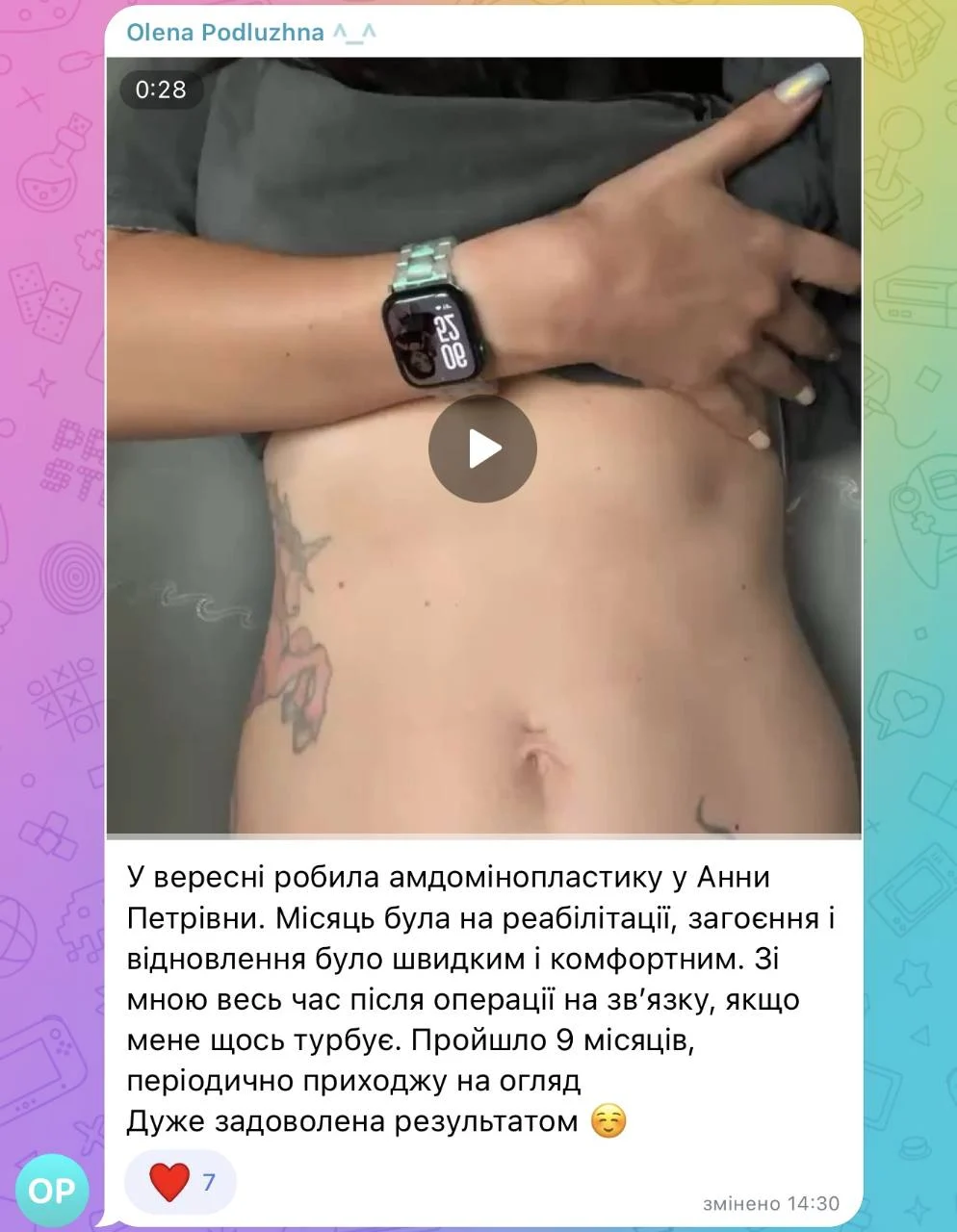
Patient reviews


Publications about body plastic surgery
All publications

iya clinic
Frequently Asked Questions About Diastasis Recti Repair
Body plastic surgery
Is diastasis recti repair only an aesthetic procedure?
Вшивання діастазу має насамперед функціональне значення, оскільки відновлює анатомічну цілісність передньої черевної стінки. Окрім покращення зовнішнього вигляду живота, процедура сприяє нормалізації м’язового балансу та зменшенню навантаження на хребет.
How does diastasis differ from general muscle weakness?
Діастаз — це саме розходження прямих м’язів живота, а не просто їх слабкість. У таких випадках фізичні вправи не завжди дають результат, оскільки порушена анатомічна структура м’язів.
Can diastasis be corrected without surgery?
На ранніх стадіях діастаз іноді коригується спеціальними програмами вправ. Однак при вираженому розходженні м’язів ефективним методом відновлення є саме хірургічне вшивання.
Can diastasis recti repair be combined with other procedures?
Так, у деяких випадках вшивання діастазу може виконуватися разом з іншими втручаннями за індивідуальними показаннями. Доцільність такого поєднання визначається під час консультації з урахуванням безпеки пацієнта.
How does abdominal shape change after surgery?
Після вшивання діастазу живіт стає більш пласким і стабільним, з покращеною підтримкою м’язового корсету. Остаточний вигляд формується поступово у процесі відновлення.
Does diastasis contribute to back pain?
Розходження м’язів живота може сприяти порушенню постави та підвищеному навантаженню на поперек. Відновлення м’язового каркаса часто позитивно впливає на загальне самопочуття та зменшує дискомфорт.
When can the final result be evaluated?
Попередні зміни помітні вже після завершення основного періоду загоєння. Остаточний результат оцінюється після повної адаптації м’язів і завершення реабілітації.
What should I tell the doctor before “Diastasis Recti Repair”?
Перед операцією лікар оцінює стан здоров’я, попередні втручання, алергії, усі ліки й добавки, куріння та фактори ризику анестезії. Обсяг обстежень і необхідність корекції терапії визначаються індивідуально; самостійно скасовувати призначені препарати не слід.
What determines the outcome of “Diastasis Recti Repair”?
План «Вшивання діастазу» залежить від анатомії, якості тканин, очікувань пацієнта та безпечного обсягу корекції. На консультації хірург пояснює можливі альтернативи, розташування рубців, обмеження методики та реалістичний прогноз.
When should I contact a doctor after “Diastasis Recti Repair”?
Терміново зв’яжіться з клінікою при наростаючому однобічному набряку, сильному болю, задишці, кровотечі, високій температурі або різкому погіршенні самопочуття. Планові огляди потрібні навіть за доброго самопочуття.
Місце проведення хірургічних операцій в Україні
Хірургічні операції в Україні проводяться в MIRUM Clinic за адресою: Київ, вул. Віктора Некрасова, 1.
